Search is changing faster than ever. With AI-driven algorithms, semantic search, and predictive analytics, Google no longer just matches keywords—it understands intent.
Businesses that fail to adapt risk disappearing from search results. This blog explores how AI in SEO is reshaping strategies in 2025, with actionable steps to stay ahead.
Understanding AI in SEO
What AI Means in SEO
In simple terms, AI in SEO refers to using machine learning, natural language processing (NLP), and predictive analytics to understand user behavior and optimize content.
Traditional SEO vs AI-Driven SEO
| Aspect | Traditional SEO | AI-Driven SEO (2025) |
|---|---|---|
| Focus | Keywords only | User intent + context |
| Tools | Manual research | AI-driven insights |
| Content | Static | Predictive + dynamic |
Role of Machine Learning & NLP
- Machine Learning → Identifies ranking patterns and predicts trends.
- NLP → Helps Google understand context, synonyms, and meaning.
- Predictive Analytics → Suggests content based on future user demand.
Google’s Latest SEO Guidelines (2025)
- E-E-A-T (Experience, Expertise, Authority, Trust): Show expertise with real data, case studies, and author credibility.
- User Intent Over Keywords: Focus on answering questions, not stuffing terms.
- Semantic Search: Optimize for topics and clusters instead of single phrases.
- AI Overviews: Clear, structured content may be featured in AI-generated SERP overviews.
- Core Web Vitals: Ensure fast, mobile-friendly, and stable web experiences.
Machine Learning in SEO
- Automated Keyword Research: AI tools analyze billions of searches for untapped opportunities.
- Predictive Analytics: Forecast seasonal demand and future ranking topics.
- Competitor Analysis: Track and compare strategies in real time.
Semantic Search Strategies
- Content Clusters: Create pillar pages supported by interlinked cluster blogs.
- User Intent Optimization: Write for questions people ask, not just short-tail keywords.
- Structured Data: Implement schema markup for enhanced SERP presence.
AI-Powered Content Creation
Using AI for Ideation, Drafting & Optimization
- Topic discovery with AI tools
- First-draft generation for speed
- Optimization with semantic scoring platforms
Human Oversight for Trust (E-E-A-T)
AI accelerates production, but human editors ensure authenticity, credibility, and accuracy.
Avoiding Pitfalls
- No keyword stuffing
- Avoid robotic tones
- Prioritize storytelling + real experience
Technical SEO and Structured Data
- Schema Markup: FAQ, How-To, and Product schema boost SERP features.
- Site Structure: Pillar pages + topic clusters with strong internal linking.
- Core Web Vitals: Prioritize speed, stability, and interactivity.
Voice Search & Conversational SEO
- Voice Search Growth: 50%+ of searches now conversational.
- NLP Optimization: Target natural queries & long-tail phrases.
- Real-Time Search: AI predicts intent for contextual answers.
Real-World Examples of AI in SEO
| Business Type | AI Strategy | Result |
|---|---|---|
| E-commerce | Product schema + clusters | 35% more organic traffic |
| Local Business | Predictive keyword shifts | Top 3 in Google Maps |
| SaaS Company | AI-driven A/B testing | 40% more conversions |
Tools to Try: SurferSEO, Jasper, Clearscope, MarketMuse
Case Study – AI Boosted SEO by 25% in 2025
At Harshit Media, we partnered with a mid-sized e-commerce brand that was struggling to grow its online visibility. Despite publishing regular content, the site faced two major issues: stagnant organic traffic and a high bounce rate.
The Challenge
- 🚩 Organic traffic growth had plateaued.
- 🚩 Bounce rate was alarmingly high at 68%.
- 🚩 Most keywords were stuck beyond the Top 20 in Google search.
The AI-Driven SEO Strategy
To turn things around, we implemented a data-backed AI SEO strategy focused on both semantic depth and technical accuracy:
- ✅ Keyword Clustering with SurferSEO → Optimized content for topic clusters, not just single keywords.
- ✅ Schema Markup for FAQs & Products → Improved SERP visibility and click-through rates.
- ✅ AI-Powered Competitor Tracking → Monitored rivals’ ranking shifts in real time and refined content accordingly.
The Results (After 3 Months)
The improvements were clear and measurable:
- 📈 +25% increase in organic traffic
- 📉 Bounce rate dropped from 68% → 42%
- 🔑 18 new keywords entered Google’s Top 10 rankings
Key Takeaway
📊 This case study shows that when AI-driven strategies are combined with human expertise, SEO success becomes both predictable and scalable.
Core Web Vitals: The Foundation of AI-Driven SEO
In 2025, Google continues to reward websites that deliver a fast, stable, and user-friendly experience. These signals—known as Core Web Vitals—are now tightly connected with AI-driven ranking systems.
Why Core Web Vitals Matter
Search engines use AI to analyze not just what content you publish, but also how users experience it. A page that loads quickly, responds instantly, and doesn’t shift unexpectedly keeps visitors engaged—and earns better rankings.
The Three Core Metrics
| Metric | What It Measures | Recommended Benchmark | Why It Matters |
|---|---|---|---|
| Largest Contentful Paint (LCP) | Loading speed of main content | ≤ 2.5 seconds | Visitors stay longer when content appears fast. |
| First Input Delay (FID / INP) | Time for the site to respond to first user action (e.g., click) | ≤ 200 ms | Delays frustrate users and hurt conversions. |
| Cumulative Layout Shift (CLS) | Visual stability (does the layout “jump” while loading?) | ≤ 0.1 | Prevents mis-clicks and builds trust. |
How to Improve Core Web Vitals
- 🚀 Optimize Images: Compress and use next-gen formats (WebP, AVIF).
- ⚡ Use a Fast Hosting Stack: Leverage CDN, caching, and server optimization.
- 🛠️ Minimize JavaScript: Reduce unused scripts that slow interactions.
- 📱 Mobile-First Design: Ensure responsive layouts across devices.
- 🔗 Lazy Loading: Load images/videos only when visible on screen.
Key Takeaway
✅ Core Web Vitals are no longer “technical extras”—they’re ranking essentials. By combining a smooth user experience with AI-powered optimization, businesses can secure both higher visibility and stronger engagement.
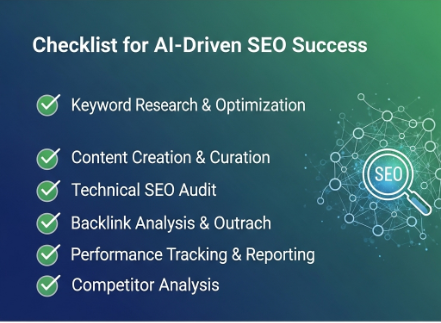
Checklist for AI-Driven SEO Success
Conclusion
AI in SEO is a game-changer. Search is becoming predictive, conversational, and context-first.
Brands that embrace machine learning SEO, semantic optimization, and structured data will dominate rankings in 2025.
Ready to future-proof your SEO? Start by adopting AI-driven strategies today and stay ahead of Google’s evolving algorithms.
Shweta Sharma.

Shweta Sharma is a Content Strategist and SEO Specialist at Harshit Media, where she helps businesses grow their online visibility with result-driven SEO and digital marketing strategies. With expertise in local SEO, content marketing, and Google optimization, she is passionate about turning search traffic into loyal customers.
- admin

- admin
- admin

- admin